
A Second Summer of Grief: Texas Floods Again, and the Climate Signal Is Unmistakable

For the second July in a row, the rivers of the Texas Hill Country rose in the dark and took what they wanted. In Center Point, the Guadalupe River climbed roughly 26 feet in under an hour, sending families scrambling for higher ground. By the time the water crested, Gov. Greg Abbott had declared disaster in 59 counties, and communities from Kerrville to Uvalde to Sonora were once again counting losses — this time, some areas saw more than 20 inches of rain fall in just four days.
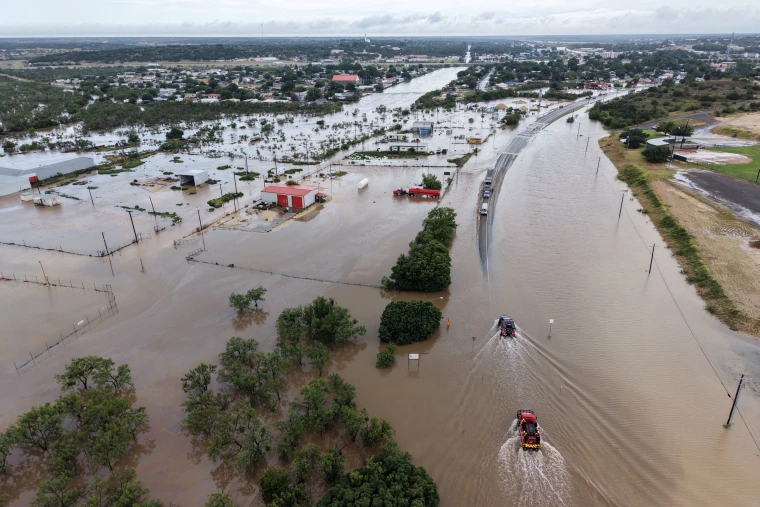
The dates, the rivers, even some of the same towns: it is almost too painful to note how closely this disaster echoes last July's floods, which killed at least 139 people, most of them in Kerr County, and remain the deadliest inland flooding disaster in the United States since 1976. This year's storms proved crueler in one respect — they spread across a much wider footprint, with four counties recording more than a foot of rain instead of one narrow stretch of river — even as swift installation of new warning sirens and faster evacuations appear to have held the death toll far lower than the tragedy of 2025.
For people of faith who take seriously the call to steward creation and to protect the vulnerable, this is no longer a story about bad luck. It is a story about a warming world making Texas's worst nightmares more frequent and more severe.
The physics are not mysterious. For every degree Celsius the atmosphere warms, it can hold roughly 7 percent more water vapor — moisture that has to come down somewhere, and increasingly it comes down all at once. Meteorologists tracking this year's storms pointed to the same driver: the Gulf of Mexico has been running warmer than average, feeding extra evaporation and rain-making moisture into the systems that struck the Hill Country. The state's own climatologists have already documented the shift: Texas has seen up to a 15 percent increase in extreme rainstorms so far this century compared with the late twentieth century, with the state's own projections pointing to a further 20 percent jump in these storms within the next decade.
Scientists studying last year's flooding reached the same conclusion in stronger terms. As one Oxford researcher put it after analyzing the 2025 disaster, the floods reflected the growing force of a warmer, more humid atmosphere fueled by climate change — and one prominent climate scientist has described the effect as steroids for the weather, injecting extra intensity into storms that would form anyway.
None of this erases the raw, human cost sitting in front of Texans right now: a young couple in Kerrville who lost nearly everything they had gathered for their expecting twins, volunteers who returned to rivers they'd already grieved beside a year earlier, families still rebuilding from 2025 who now face a second recovery. It is a reminder that a warming planet does not strike evenly or fairly — it strikes hardest at the people with the fewest resources to absorb the blow, which is precisely why the call to love our neighbor demands more than sympathy. It demands action: supporting the communities doing the hard work of recovery now, and pressing for the kind of stewardship of God's creation that slows the warming driving these disasters in the first place.
The waters in the Hill Country are receding again. Whether the pattern behind them does is still, largely, up to us.